My top five decorating no-no’s
Well, we all have our likes and dislikes.
And, if you have been following this blog at all during the last six months since I started it, you’ve seen a lot of rooms that I like, since I try to keep the negative verbiage to a minimum.
But today, please indulge me, just this once, to name a few things I don’t like.
These are some things that bug me in otherwise beautiful homes.
#1. Too many personal photographs.
Especially on bookcase shelves.
A plethora of family photographs= visual clutter.
Pick a few gorgeous ones of meaningful life events (weddings or christenings, for instance).
Invest in pretty frames that complement each other. Don’t mix a hodge podge of frame styles or color finishes.
For all your other cherished photos: Why not invest in a nice leather archival photo album, fill it with your favorites, and place it on the family room coffee table where you or your friends can actually take the time to enjoy looking through the pages?
If you have too many displayed photographs, I can practically guarantee that you don’t really “see” them anymore.
#2 Paperback books on display
This downgrades an open bookshelf immediately.
If you don’t have a decent collection of hardbacks for your shelves, use the space for some other type of collection or grouping until you do. A good designer or a friend with a practiced eye can help you style your bookshelves for maximum visual appeal.
And, as a p.s. while we are talking about books: don’t fall for the contrivance that is shown in some magazines of covering your books, paper or hardbound, in white butcher paper. That is the silliest thing I have seen lately. Books are to be seen, and read, not covered up as strictly decoration.
When you buy a paperback: Read it, then Pass It to a friend, or Donate It. Never open-shelve a paperback book.
3. Skimpy drapery.
Look through any high-end decorating magazine. Quality draperies “kiss” the floor, but yes, you can puddle your draperies if you live in New Orleans or the in English countryside. Otherwise, it is a bit dated looking. The kind of pleats you see will be soft, unpressed pleats, and several widths of fabric to look luxurious. I am not saying this isn’t an investment. It is, but well-done draperies finish a room. For a budget decorating project, use two panels of ready-made curtains per side of the window. Hang the rod high, and let the rod extend out beyond the outer sides of the sill.

Triple-width French doors with drapery. Image ©Color Calling
4. Pink or orange wood cabinetry anywhere.
This is a very dated look. And, yes, I know men hate to paint wood.
Paint it.
White.
Here is orange:
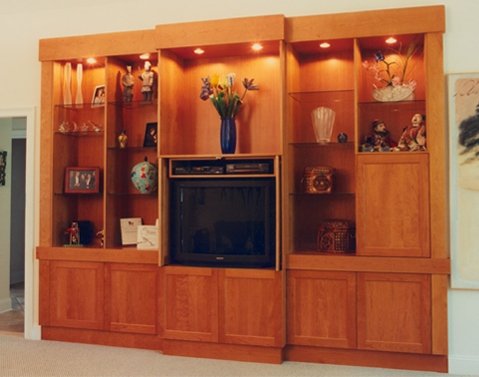
And here is pink:
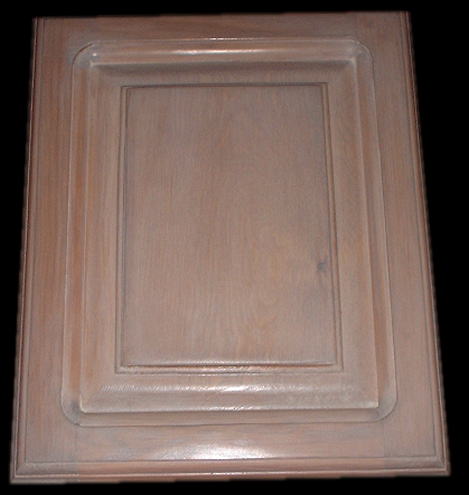
pickled cabinet-yes, this is pink.
#5 Using colors out of the blue that ignore a room’s fixed finishes.
Here, below, the yellow wallpaper is just wrong in every way for the space. It is too bright for the muted blue counter and tiles, and it is not repeated anywhere else in the room, and so it sticks out like a sore thumb.
Middle image, the correct color (In Your Eyes, Benjamin Moore) takes into account the fixed muted blues everywhere else in the room. Bathrooms and kitchens are the two worst offenders, because of tile and countertops being expensive to replace.
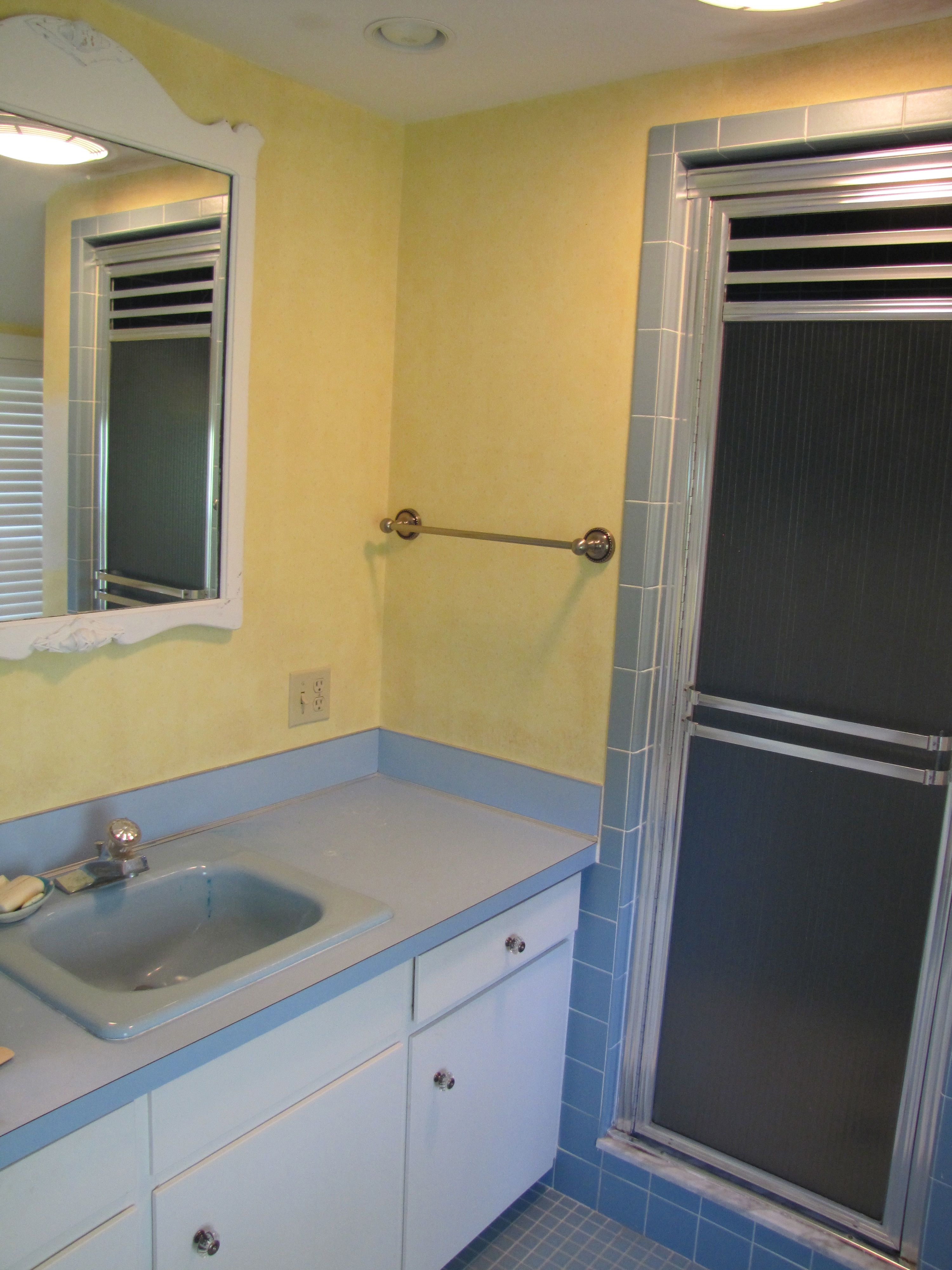
Yellow wallpaper with blue fixed finish
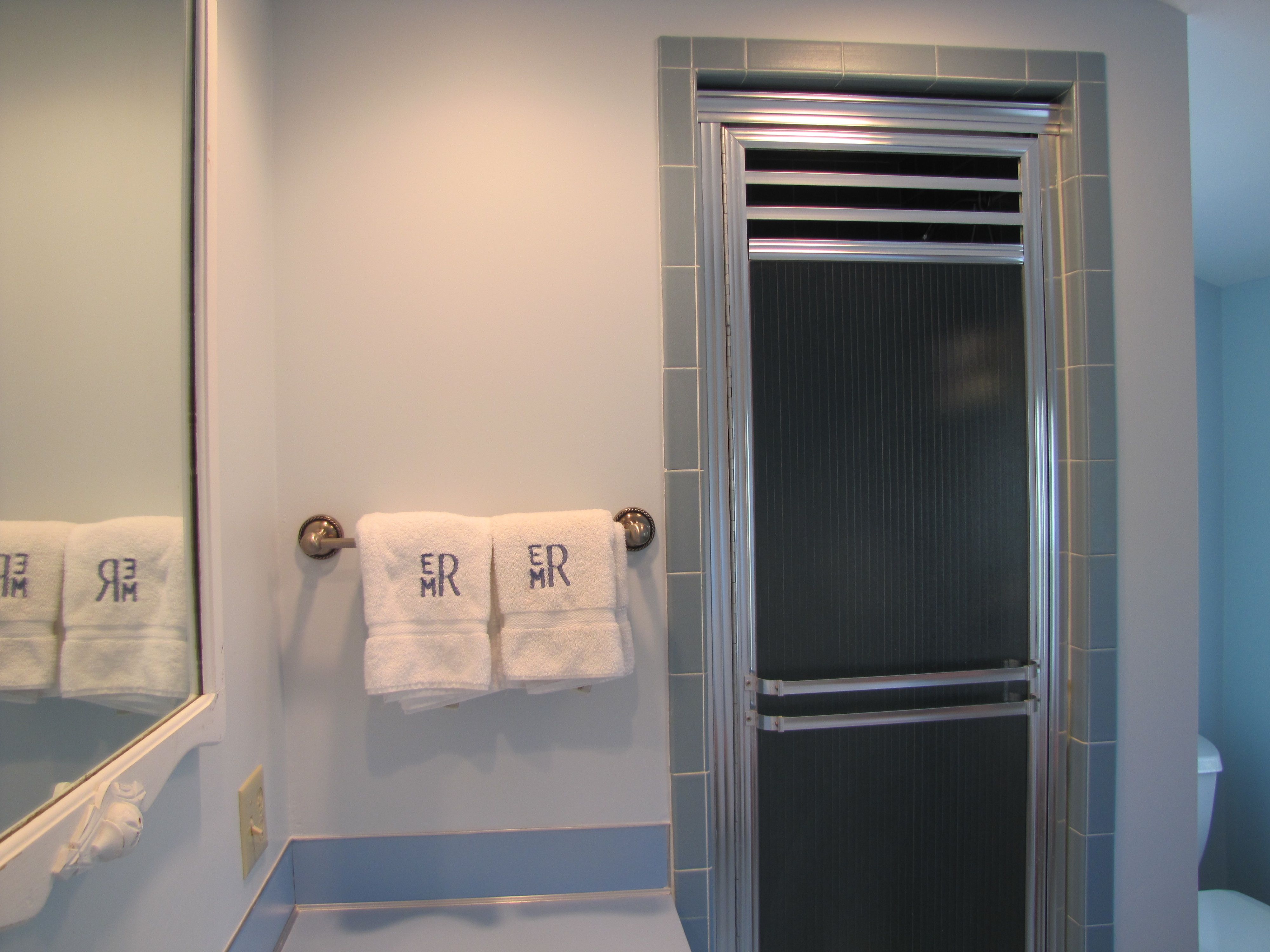
Newly painted bath, Image ©Color Calling
Do you have something decoration-wise that bugs you? Do tell!
Proof your dark hallway shouldn’t be light beige

Source: google.dk via Stine on Pinterest
If you are like me, you were always told that you have to paint a dark room a light color.
Well, we were told wrong!
A light color in a dark room will turn “Landlord Beige.”
Go darker and richer in a dark room, and a stunning result will be yours.
Just a little tidbit I learned when I went through True Colour Expert Training.
Repeat after me: “A light color will never come to life in a dark room.” (Thank you, Maria Killam!) (click on Maria’s name to link to her site).


Source: heirloomphilosophy.blogspot.com via Brianna on Pinterest

Source: atticmag.com via Allison on Pinterest
Once in a blue Moon

Moon rising over Nantucket Sound 9-01-12 Image ©Color Calling
The colors of nature are sometimes just too gorgeous to be believed.
What’s the best color for a workout room?

Contemporary Home Gym design by Vancouver Design-build Capstone Dwellings, Design-Build
I am often asked, What is the best color for my ______ room? What do I say?

So what is the best color for a workout room?
Here is a hint: NOT BORING BEIGE!
Think about it: you are stimulating your heart, and your other muscles when
you work out. Why not give yourself something pleasing to stimulate the eye as
well. I like to recommend that we start with your favorite color, and go from
there.
Anything that pleases your eye will help encourage you to go in and really use your work-out room.
Many work-out rooms (home gyms) are in low-natural-light areas, such as a
basement, anyway.
Beige is probably the worst possible color for a low-light area.
Contrary to anything you may have been told about keeping low-light areas light
in color, “A light color will never come to life in a dark room.” (wise words from Maria Killam).
Beige just looks dingy when there is little or no natural light.
So, which room would you rather exercise in, one that looks like these two, below:

 Contemporary Home Gym design by Seattle Interior DesignerShannon Diana Lynn, Klang NorthWest

HERE are some dedicated home exercise rooms in a variety of colors to give you some inspiration.
Cool gray walls and persimmon flooring.

Muted green walls with bright blue accents.

Gray walls AND ceilings with silver accents.

Happy yellow walls with an accent rug in charcoal gray.

Green.
Contemporary Home Gym design by Seattle Interior DesignerShannon Diana Lynn, Klang NorthWest
Acid green.

A more Spa-like green.


A cleaner yellow combined with greens and taupes, bamboo flooring.

Red.
Source: google.com via Katie on Pinterest
Aonther bold, fun choice, terracotta red (tip: don’t ever paint out a ceiling like this).

Mustard with walnut flooring.

And another look at my favorite, Yankee blue with zippy striped carpet.
Pt.2 The eye craves balance
The previous post was about symmetry, mirror image symmetry. Let’s look at “asymmetrical balance” today.
Asymmetrical balance is not the same as mirror image symmetry. Asymmetrical balance, another decorating technique, relies on similar visual weight.
In design, it is also very pleasing to the eye to have a focal point flanked with two sides of equal weight, but not necessarily identical (mirror image) sides.

See how — though not identical — both sides of the room have approximately equivalent visual weight?


Below:
This is a combination of mirror image symmetry plus asymmetrical balance. Can you find the elements of each?


Asymmetrical Balance: note the central focal point (which is the fireplace) serves to anchor the other elements on left and right.


For people who love to color outside the lines, asymmetrical balance can give them a bit looser structure, and still be very visually pleasing.
Which do you prefer, mirror image symmetry; asymmetrical balance; or a combination of each?
The eye craves balance

Source: myhomeideas.com via Kay on Pinterest
The eye craves balance.
Do you believe me? Have you ever walked into someone’s house and a painting or mirror is hanging askew?
Does it drive you a bit crazy? Don’t you find yourself wanting to straighten it?
Now, it does not always happen in your own house (this is because your brain will tune out the things that you are seeing regularly.)
The same thing happens with symmetry. Quick, off the top of your head, do you have a favorite room in your house, or a room that you really, really love as your dream room that you saw in a magazine?
Check it out. I will bet you dollars to doughnuts that the room is highly symmetrical or balanced.
Rooms that are symmetrical are more pleasing to the eye. They create visual harmony and balance. This is an age-old decorating principle.
Today we’ll look at rooms with “mirror image” symmetry. Come along!

Design by Ellen Rhett of Color Calling

Source: houseofturquoise.com via Frances on Pinterest
So, symmetry for the furniture placement is a decorating form that is pleasing to the eye.
“Mirror-image” symmetry is what we see in the bedroom above. Other than the focal point bed+ starburst mirror, there are two of
everything, matching.
Even the nosegays on the bedsides are identical.
The same design principle is true when the decorating is done around a focal point fireplace, or any other focal point.


Source: indulgy.com via Kristen on Pinterest

Source: casatreschic.blogspot.com via Laura Mitchell on Pinterest

Source: Uploaded by user via Kelli on Pinterest

Source:

Source: southernpiphi.tumblr.com via Jean on Pinterest
Designing a Tasteful Home Movie Room
Yes, it is possible to have a tasteful home movie room. What are some decorator secrets for an attractive dedicated home movie room?


Eclectic Media Room design by Minneapolis Interior Designer Mingle
#1 Don’t call it a Home Theater
This verbiage has less-than-tasteful connotations, I am going to call it like I see it.
Home Theater draws an image of a soldier-row of lumpy leather recliners with built-in cup holders.
What about calling it your movie room? It sounds so much more attractive already!

#2 Function First

A good Audio Video specialist can help you decide what type of equipment fits your demands and your budget.
If possible, have your room pre-wired for the type of equipment before your walls are installed.
I personally like a front-projection system in a dedicated (completely light-controlled) movie room, see the little projector mounted on the ceiling below? Visit a good A/V demonstration room to see what you like and what fits your parameters.

#3 Know your optimal viewing distance
Ask your A/V specialist what the optimal viewing distance is for the system you have selected. Obviously, the larger the screen, the further away the optimal viewing distance. This is where your main sofa should be placed.
Make sure your screen is placed at optimal viewing height as well (above a fireplace is usually NOT optimal height if you wish to avoid neck strain.) You can see how comfortable viewing would be from the main sofa here, below:

This is not the time to go it alone. Get an experienced designer involved before your installation is purchased.
If you are on a budget, you can not afford to make a mistake.
Working together, your designer can suggest a floor plan and soft furnishings that will enhance the use and beauty of your movie room, so that it will be one of your favorite rooms in your house.
#4 Pad and cover your walls with fabric for optimal sound.
This is a job for an experienced professional.
Don’t forget extra sound-proofing between floors.
#5 Carpet is a must for any good audio system to sound its best.

#6 Use operable (hand-drawn) draperies with full black-out lining for complete light control.
#7 Good-looking case goods/built in cabinetry for housing components.

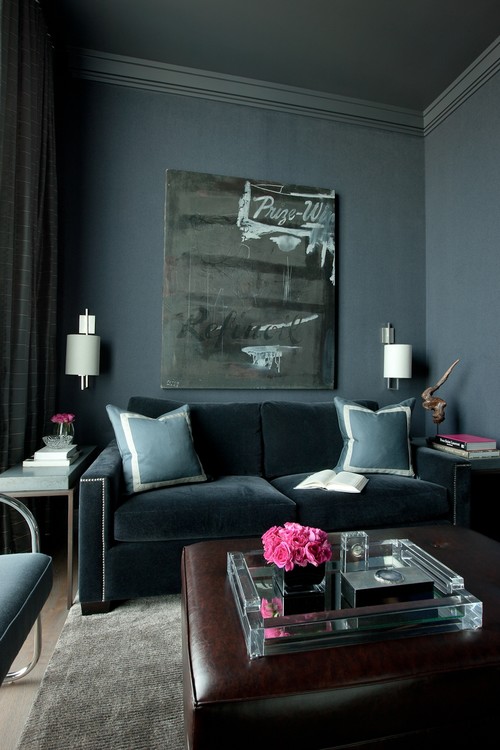
#8 Comfortable furniture and a soft place to prop your feet
Think a full-sized sofa, some lounge chairs, and ottomans.
No hard-surface coffee tables, which are uncomfortable for foot-propping, and will improperly reflect sound waves.
A better look is to have your dedicated movie room look more like a regular family room, tailored around the movie screen.
#9 No extraneous appliances or auxiliary activities
As tempting as this may be, don’t put anything else such as pool table, ping-pong or appliances in the same room. If possible use an adjoining area nearby.

Ice machines, even the most expensive, make distracting noise and should never be placed in the movie room.
Find a place in a nearby area to install the wet bar, ice machine, a small fridge, etc.
It might sound like a fun idea at the time, but a ping-pong table or pool-playing are not really compatible activities with movie-viewing, and as such really don’t belong in a dedicated movie room.
#10 Dimmers on all lights in a movie room.
Make sure that you can easily and quickly access them when entering and exiting, because a dedicated movie room is dark without natural light. This is an overlooked tip that will enhance your enjoyment of the room.

Source: homedepot.com via Dani on Pinterest
Do you have a movie room, or would you want one? What are the important elements for you in a room like this?
How do you determine exterior light size?
We all know curb appeal is important. When I do exterior color consultations, I always look at the big picture.
Many times, I will recommend that my homeowner consider upgrading the main doorway light fixture(s).
Think about it, your home is being most often viewed from street distance. Make sure your light fixture is proper size.


Now that your eye has been shown a good proportion, take a look at the following lighting scheme:

Don’t you prefer the 4:1 ratio of door to light? Doesn’t the above lighting scheme look dinky now that I am pointing this out?
The house below is a tad busy, but the main front door lighting has nice proportions. By the way, better to be a bit big than too little:

What about this one?

If you said too small, I agree. (I am not loving the huge sidelight to the right of the door, which would be the correct place to have a light).
What about this?

Did this visual exercise help you determine the correct size for your lighting? Does your own exterior lighting have enough presence?
Do you agree with my proper proportions guideline?
Use These Six S’s to Jazz up your Bedroom
#1 The Show-Stopper
The bed.
First, I assess the actual placement of the bed. If possible, the bed should be the first thing you see when you come into
the bedroom. It should be the focal point. It should provide the visual wow factor. This is always an investment.

Bed Design by Ellen Rhett, Image ©Color Calling


#2 SYMMETRY
Use pairings to create symmetry, which keeps the eye rested. Then add a few unusual pieces and accessories to keep the eye interested!

I like to create symmetry by using matching lamps on the tables to each side of the bed.
I sometimes specify matching bedside tables, but we want to avoid the dark, dated “bedroom suite” look.
It is important that the matching lamps are on the same plane, in other words, that one is not higher than the other.
This can be easily accomplished by resting the lamp base on a coffee table book or a decorative box, below.

Think a pair of smallish upholstered lounge chairs, with at least one ottoman if there is space, for further symmetry.

Source: thefoodogatemyhomework.tumblr.com via Jennifer on Pinterest
Another tip: Never, never, never place a leather chair in a traditional master bedroom.
It is not the right element and will look cheesy, unless it it done like this, in a darker bedroom with a clearly funky/masculine vibe:

#3 SCALE
Don’t overload your wall space with furniture. This is the room that should be your sanctuary from your busy life.
It will be a much more restful place without huge pieces of hulking furniture.
If possible, use closet shelving for storage rather than big chests-of-drawers. If you must use large furniture, consider lighter colors to keep
from overwhelming the space.
Resist the urge to put a television in your master. Remember, you are creating a space apart from the real world!

Source: weightloster.com via Elmer on Pinterest
#4 STYLE
Scour decorating magazines and find your style. A good design person can help you bring your vision to life. She can also help you decide which of your existing pieces of art or furniture can be used again, and where to allocate your budget for maximum impact.


#5 SOFTEN
Soften hard edges. Place a bench at the end of the bed. Think of ways to add soft furnishings to the bedroom.
Use a gorgeous vintage chandelier, and put the switch on a dimmer for soft, romantic lighting.

Design by Ellen Rhett, Image ©Color Calling
Add a cashmere or other luxury throw somewhere in the room. Add a chaise and then use it for reading / napping!

Source: jalonburton.blogspot.com via Jalon on Pinterest
#6 SAVOR

Invest in the finest mattress and sheets you can afford.
I love Tempurpedic and would recommend it to anyone. (full disclosure: I am not getting anything for saying that, I truly believe in the product).
I love luxury linens and I make sure they are ironed each week. Nothing is more heavenly!
Enjoy your retreat from the outside world. Make it beautiful and make it your own. You can’t afford to make mistakes, so invest in professional advice to
stay on track!
These are my “S” tips for creating a master bedroom that you will love. What do you think? Is this advice you can live with?
Summer Entertaining with a complementary color scheme

Source: google.com via Ellen
I use my love of color and color combinations when I entertain. Blue/
Orange are complementary (opposite) colors on an artist’s color wheel.
Here is a sampling of a classic casual look which captures those late-
summer colors. Below, a simple but delicious lobster dinner was
served for a family birthday.
Notice the play of the colors in the “Nantucket Red” placemats and
the bright saffron embroidered-lobster napkins, with the complement
of the blue accessories and the blue and cream stripes on the chairs.
 Image ©Color Calling

- Image ©Color Calling

When using the color scheme of blue and orange in decorating, these
complementary colors actually intensify one another visually.
I find true blue/true orange combinations too jolting or too juvenile for
home decór, when you live with them on a daily basis. (The muted versions
of the two colors can be very pleasing, however.)
Most complementary color combos work well in a table setting, though,
because table decór is all about stimulating the senses.


My Top Ten Rules for Gorgeous Powder Rooms

I love to decorate Powder Rooms. Here are my Top Ten rules for a beautiful powder room:

#1
DECIDE WHAT IS MOST IMPORTANT
Select the design element that you want to have stand out. Then low-key most of the other elements so that the end result is pleasing.
So, if you are using a killer tile, scale back on the other accents, and don’t go with a too-busy-anything-else.
If you have a mirror that is extremely decorative, don’t kill it with everything else being extremely decorative.
If you like wallpaper, this is the place for that wonderful statement wallpaper. High-end designer wallpaper that would be too-too much in a regular sized room can be perfect in a powder room.
Decide what is going to become your most important design element, so you don’t get carried away with too many other decorative finishes.
A good residential stylist can keep you on track if you are prone to going over the top.


#2
Don’t mix your metals/finishes in a Powder Room.
Try to keep the same finishes in the tiny space for a more harmonious look, below.

BELOW: The Pewter color is repeated even in the wallpaper, and the all-pewter gives the powder room a harmonious look.

#3
Don’t use dinky mirrors

#4
Use sconces in addition to overhead lighting.
Over-mirror lighting can throw odd shadows and is to be avoided.

#5
VESSEL SINKS WILL BECOME DATED
If you must use a vessel sink, be sure that it has enough depth to minimize
splashing. However, I try to avoid them altogether.

#6
Use Chinoiserie for Color and Drama

#7
Keep your undertones similar.

BELOW: Undertone Perfection.


#8
Use antique, repurposed, or vintage pieces if doing a furniture-look built-in.


Otherwise, use nice built-in cabinetry. A brand-new piece of furniture for your sink almost never works .
#9
Use creamy whites with brown, and whiter whites with black.


#10
Quality over quantity. Don’t over-accessorize, and do use the nicest soaps and linens you can possibly afford.


What do you think? Do you agree with my Ten Rules for Beautiful Powder Rooms?
Why are dining rooms so difficult to decorate?

Everyone in the design business knows this: dining rooms are notoriously difficult to decorate.
Have you ever wondered why?
Here are some thoughts, and some suggestions for avoiding some common pitfalls.
Dining rooms have very little in the way of upholstery to soften all the wood in the room.
I find that draperies are a must in a dining area, both for acoustical reasons as well as to visually soften the hard surfaces of sideboard and table.
No other room in the house has so many horizontally-planed wooden surfaces, think about it.
Even a wood-paneled study has vertically-planed wood, which for some reason, seems much different than the horizontal planes of the dining room wood.
And a study is filled with soft furnishings (like a sofa.)

Make sure that your dining room has a proper focal point. Below, it is simply the graphic black mutton and mullion
elements of the windows. The chandelier is so airy it almost goes away.

 Source: savearecipe.blogspot.ca via Shannon on Pinterest
TWO CHANDELIERS OR ONE?
I usually prefer one, the two below keep the room from having its proper focal point, and are too delicate for the space.
Have you noticed many more rooms in magazines and blogs are showing two full-sized chandeliers? (This is just a trend, so it is going to look dated in a few years).

WATCH OUT FOR MATCHY MATCHY
What about a different pair at the host and hostess place to break up a matched set?

If art is the focal point, make it as large and dramatic as possible, here: Source: houzz.com via Julie on Pinterest
And here, for a very modern treatment, P.S. Dear Owner, please drop the painting 30-36″ and it will be visually correct. It is hung entirely too high.

A few common pitfalls:
- Make sure that your rug fits the space.
It is better–far better– to have a bare floor than to have a too-skimpy rug. A residential style expert or even a friend
with a good eye can help you decide the proper size for your space.
- Beware of banquette seating. It is one trend that looks great in photographs, but can be extremely impractical.
See my post here
- Consider a round table if you have a square or square-ish dining room:

Source: hookedonhouses.net via Adrienne on Pinterest
How to use repetition in your entry hall
We’ll look today at interior entries and foyers, and the importance of repeating shapes, colors and motifs for unifying the space.
So, let’s look at what works with interior entries/foyers, from grand to humble. And for clarity, I’ll mention a few things that in my opinion don’t work.


ALL YOU DÉCOR BUFFS WHO LOVE GRAY RIGHT NOW, DOES THIS, below, DO IT FOR YOU?


SIMPLE AND BEAUTIFUL, above. A great example of good design that probably didn’t cost a fortune. What is repeated here?
WATER REFERENCE: See the subtle reference to the ocean in the coral print pillows and the jaunty black and white photograph? Both repeating the reference to the water. Just enough.
VERTICAL LINES: The slats on the settee repeat the vertical lines of the tongue in groove panels and the vertical border of the rug. Also, the center pillow has a strong vertical motif.
BALL/CIRCLE MOTIF: The circles on the two end settee pillows repeat the balls of the little sconce. Are you seeing that when things are repeated, they are more pleasing to the eye?
COLOR HARMONY: The pale blue wall is perfect with the pinky-beige paver tiles. No clashing undertones in this humble but lovely space.

NOW, I’ll BREAK DOWN THIS “HIT AND MISS”, below:
THE MILLWORK IS NICE, AND THE PAINTING MAKES A BEAUTIFUL STATEMENT ON THE LANDING. THE HANDRAIL IS PERFECT.
However, they should have repeated the black, on the door. The ash finish of the wood door is off, it needs to be black.The countrified rust and beige check coloration on the relaxed-Roman shade comes out of nowhere, do you agree? I think a cozy ebonized settee with a soft cushion covered in a rich emerald green (cue color from the oil painting) would be much prettier and more welcoming than the oddly place round table, and would have kept your eye away from the A/C return vent. And, if I were styling this entry, I would certainly add a rug. Additionally, I find the flooring a tad busy since it is stained a different way than the stair. P.S. I hate rounded door hinges. See prior post on Does your Million Dollar Home have $2 hinges?.


NEVER OBSTRUCT YOUR STAIRS, but otherwise love this rustic rear entry, below. Can you name the two main repetitions used here to nice effect?

FARMHOUSE PERFECTION, below. Repeating the color black again here. I could just die over the iron door strapping and original hardware. The arch of the bookcase references the ellipses in the transom, and repeats in the lantern as well. The strong vertical lines of the tongue in groove paneling, stair spindles, and bench spindles work perfectly. The rug has motifs which reference each of these.

My Top Rules for Perfect Porches
FRAME THE VIEW


Don’t be too matchy-matchy.
Break up sets with vintage finds and flea market items.
See how one little vintage footstool and a couple of quirky lights break up the matched set of furniture, below? And a couple of roughed-up vintage tables, next image down?


Too matchy-matchy, below:

Propped up Vintage shutters can add interest and depth to a plain long wall:


Image ©Color Calling
Keep CLEAN colors together

and MUTED colors together

See what happens when you mix clean [the pillows] with muted [the fireplace stone]? The effect is not as visually pleasing or harmonious.

So, don’t mix “Clean” (the red pillows) with “Muted”(everything else)

If you wish to use humorous or cliché phrases, do so with a little subtlety, like this:

Use plants to help carry out your color scheme
(you do have a color scheme, right?)


Use pretty colors as a vignette if space allows, even if no one ever sits there. It can just “BE” pretty.

Respect the architecture of the home when furnishing and styling the porch:

Don’t forget to use plants on your porch! (Look at this no-plant porch. Did you realize what was wrong?)

USE UNDERSTATED OR SOLID UPHOLSTERY FABRIC which can be more easily jazzed up with toss pillows:

Image ©Color Calling

Too much graphic upholstery doesn’t work. It looks dated:


Do give a nod to the topographical area of your porch, but don’t go overboard.
These two porches, below, hit the right note of “beach”, without giving in to too many clichés:


AND, IN THE HILL COUNTRY, how is this for rustic perfection?

COMFORT MATTERS
IF YOU WANT YOUR PORCH TO BE USED, you must have comfortable (deep seating) furniture.
Which lovely porch would you rather sit in for a while?

OR THIS?

WHITE IS NOT A NEUTRAL

WHITE PERFECTION:

GO FORMAL IF YOU WISH.

DON’T BE AFRAID TO USE NOT-OUTDOOR-ONLY THINGS IN A COVERED AREA. But, use only outdoor-approved electrical items on your covered porch.


PAINT THE PORCH CEILING BLUE OR UNIFYING A COLOR.


ADD SPEAKERS FROM YOUR SOUND SYSTEM OR A TELEVISION TO ADD LIVELINESS.

Style Watch: Gorgeous Freestanding Bathtubs


More contemporary, definitely masculine, and just as gorgeous:


Some things to consider:
A freestanding tub is supposed to be the focal point of the bath. Don’t hide it around a corner or behind part of the vanity area.
A freestanding tub normally has a twist-drain closure. Make sure you can reach comfortably down to close the drain.
Some freestanding tubs have such high sides that they are a challenge to enter for the less-flexible. Make sure you can comfortably step inside and back out. Some models have a lower center to make this easier to negotiate.
If you will be bathing infants or very small children/grandchildren in the tub, a freestanding tub with high sides is not for you.
Very specialized plumbing fixtures and more intricate installation are required. The price points on all are generally considerably higher than regular tubs.
Does your house tell a story?

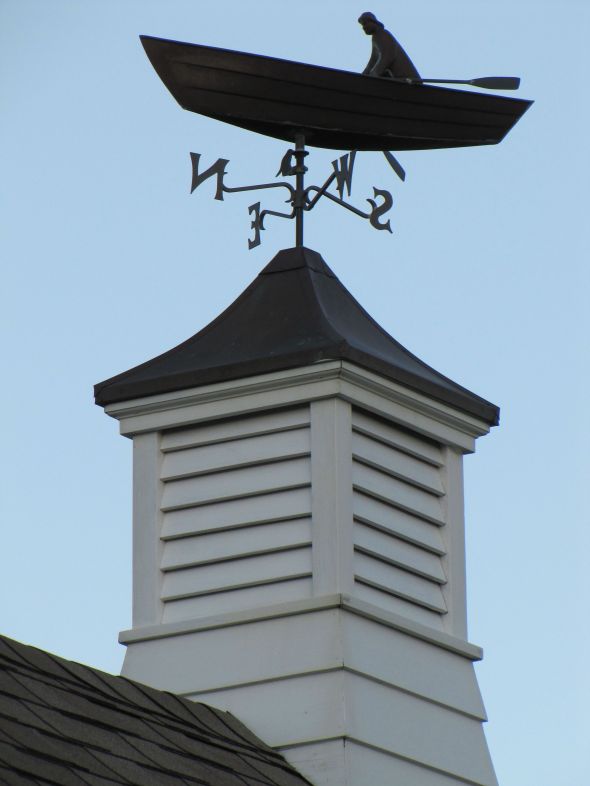
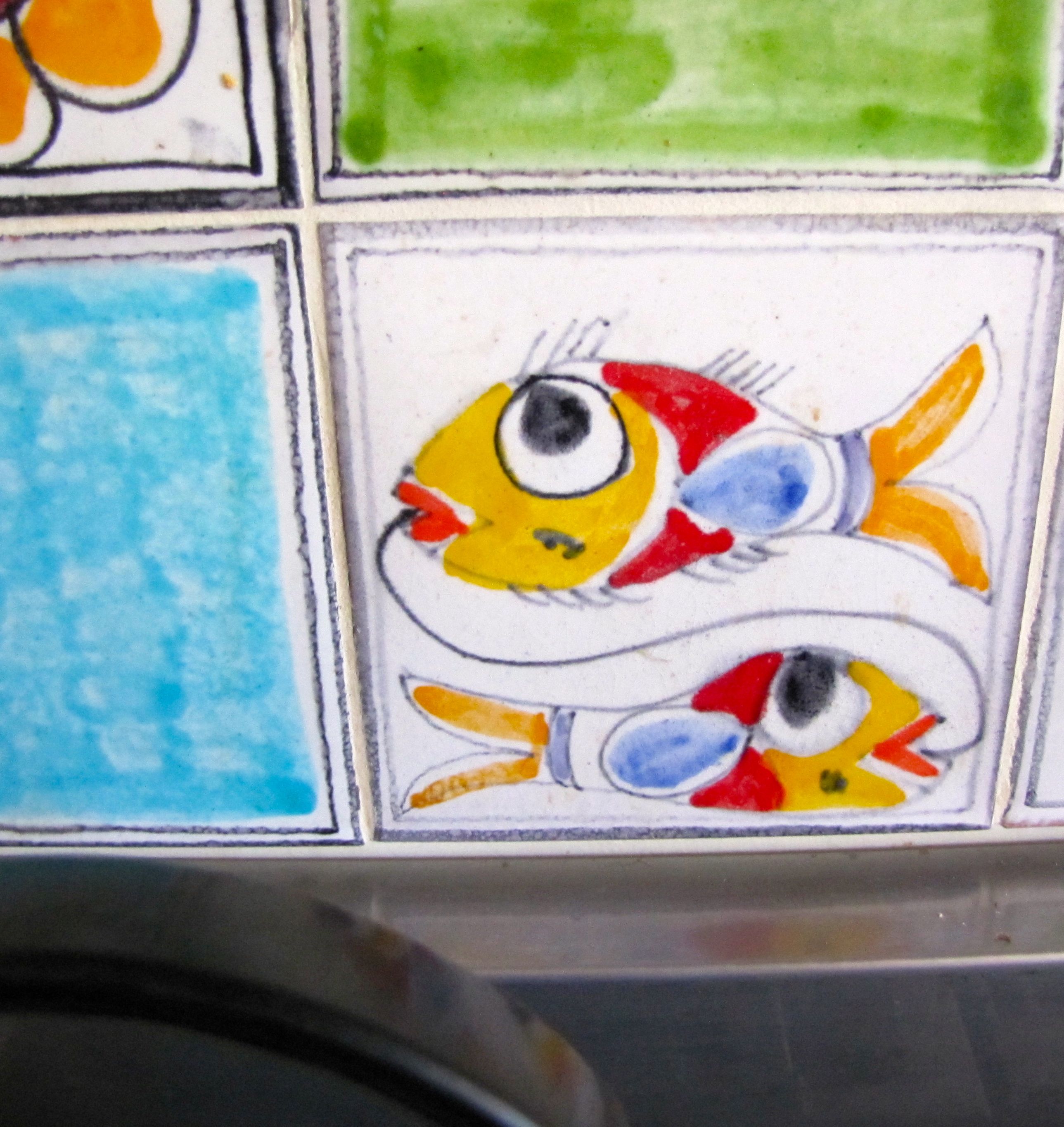
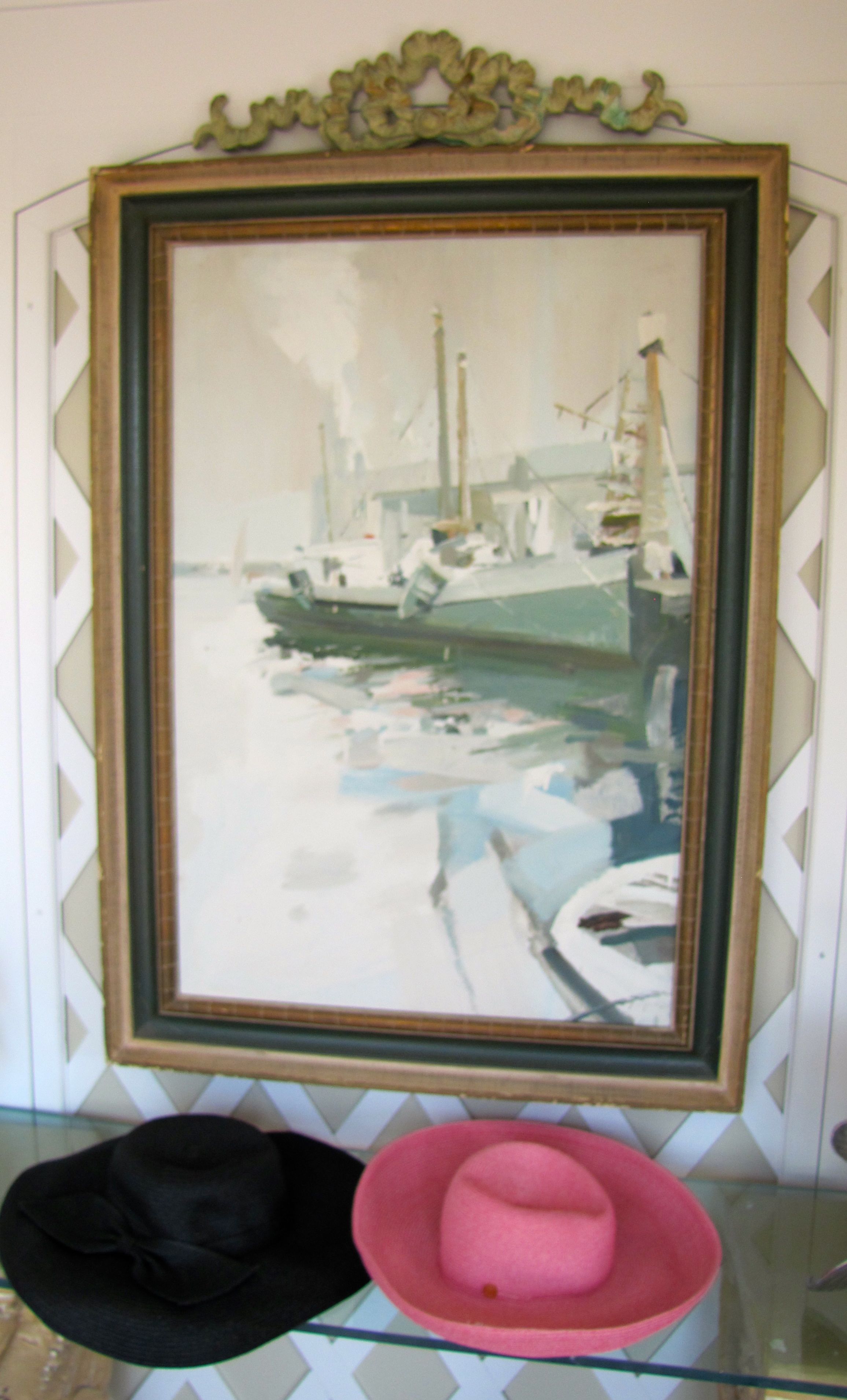
The story of a house. Landscape Designer extraordinaire Tara Dillard says it best. The narrative. Tara designs gardens that tell a story. I work with houses. Story-telling. Narratives. Narratives are wonderful.
The golden codfish overdoor, above, is part of the narrative of my little Cape Cod summer cottage. Don’t get me wrong, I am not talking about going overboard with a cloying theme for your house. No “Welcome to the Beach” signs over the sink. I am talking about a simple story-line, a thread, a narrative. A narrative is how I say “welcome to the beach.” Here is my narrative. What story does your house tell?



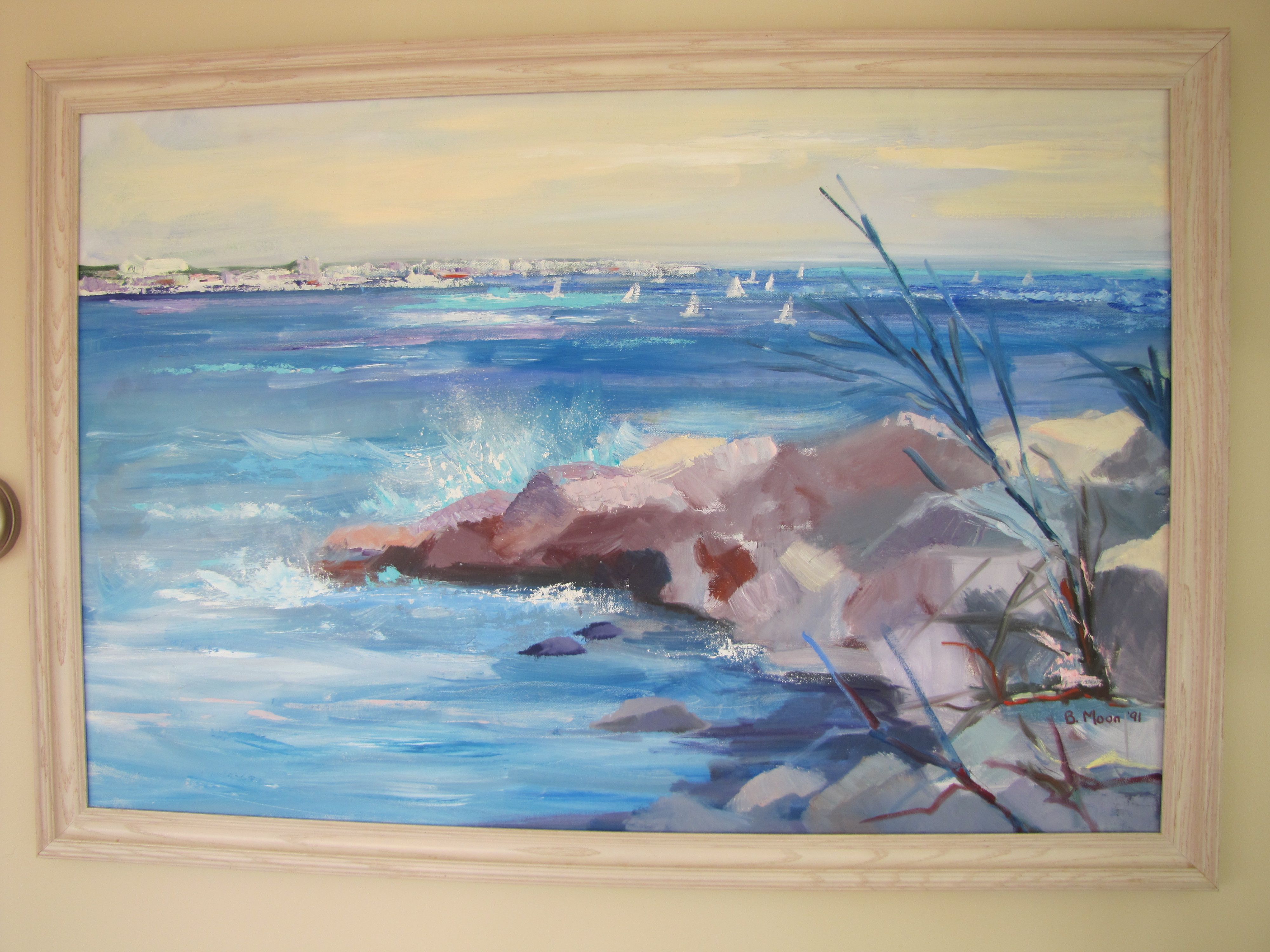

All images ©Color Calling
My Top Ten Tips for Styling a Fireplace Mantel
Tip #1: Use real art, not a mirror, over the fireplace. This will provide depth and character.

Source: houseofturquoise.com via Minna on Pinterest
Tip #2: If you have a collection, pair it with complementary real art for a statement that is yours alone:


Source: eleanorcummings.com via Emily Cayne on Pinterest
Tip #4 Select art with a color palette that looks good with the rest of the room. This is a good place for a pop of color (that you should repeat three more times in the room.)

Tip #5 No dinky accessories. (These are nicely proportioned.)

Source: houzz.com via Natalie on Pinterest
Tip #6 Handcrafted vases, antique vases, bronzes, antique tapestry hangings, are all good possibilities. Take a look around your house for others. Look for pieces with presence to accessorize.

Source: vacationist.com via Cathy on Pinterest
Tip #7 This is your main focal point in the room. Make it count.

Source: saffroniabaldwin.com via Ann on Pinterest
Tip #7 Use sconces.

Source: Uploaded by user via Sandy on Pinterest
Tip #8 No framed family photographs. Find other accessories for a more current overall look.

Tip #9 Remember that you must balance the large dark hole of the firebox. Think deep and rich, not dainty, for the over mantel décor.

Source: housebeautiful.com via Harper on Pinterest
(#9 Balance the dark hole of the firebox)

Tip #10 Use a portrait light (not shown).

For easy reference, here are my top ten tips for styling a beautiful fireplace and mantel area:
(1) Use real art, not a mirror.
(2) Bigger is better, but don’t exceed the width of the mantel.
(3) This is your main focal point in the room. Make it count.
(4) No dinky accessories.
(5) No framed family photographs.
(6) Handcrafted vases, antique vases, bronzes, antique tapestry hangings, are all good possibilities. Take a look around your house for others. Look for pieces with presence to accessorize. If you have a collection, this may be a good place to incorporate it with a complementary piece of art overhead.
(7) Remember that you must balance the large dark hole of the firebox. Think deep and rich, not dainty, for the over mantel décor.
(8) Select art with a color palette that looks good with the rest of the room.
(9) Use a portrait light over an oil painting.
(10) Add a pair of sconces.
Summer Chinoiserie
Sometimes a dash of light-or-white Chinoiserie is the perfect punch for summer living, whether in a summer getaway,
or in a room in your home that is more frequently used in the summer. Here, some summer inspiration:

Source: housebeautiful.com via Emily on Pinterest


Losing your Ledge
Compare the good-looking built-in bookcase, below……..

Source: shelterness.com via Ellen on Pinterest
……..to the Southern Living Bookcases, here, below. Do you know what I mean by “Southern Living” Bookcases? Here is what I am referring to:

Source: findingfabulousblog.com via Ellen on Pinterest
This is my personal terminology. A Southern Living Bookcase. It is what I call a built-in with a ledge. Usually with a dreaded colonial curve in the panel and a not-so-attractive visible hinge.
This was the hot look for some, back in the early 1980s. Nearly every family room example in a 1980s Southern Living magazine featured a built-in bookcase like the one above. Everyone wanted to have a built-in with a ledge, which was generally used to display a plethora of framed family photographs.
Flash forward. This is a very dated look. Although about half of the houses I work with have Southern Living Bookcases, it took me half an hour to find an online photo of this look. Here is a little decorating secret that I learned in True Expert Training with trend/color expert Maria Killam: if it has been a long time since you’ve seen something in design magazines, it is probably dated.
Are you holding on to a Southern Living Bookcase in your beautiful home:
a) because it’s been there so long you didn’t even notice it
b) because you don’t know how to make it better, or
c) because you don’t agree that it is dated.
If you answered a) or b), don’t worry!
There is help. When the bookcase is made flush from top to bottom, a dated-look suddenly becomes current. But, please trust me on this, you are going to have to lose the ledge, if you want to update the look!
This is going to require a carpenter. This is going to be a retrofit job. But, it can be done, and it can be done beautifully.
You have several choices:
— remove the bulky bottom section and repeat the open shelving from top to bottom;
— maintain the section of closed cabinetry, but decrease the depth of the bottom section in order to bring the bottom section into the same plane as the top section
(there may be flooring constraints, so beware if you are working around wall-to-wall carpet that is not being changed, for example);
— or increase the depth of the top section.
Here, we simply added a pair of doors to the top section with some gorgeous antique brass French open-work wire inset. See how much nicer a flush line of cabinetry looks? How much cleaner the visual line running ceiling to floor looks?

Image ©Color Calling
Painting the interior of the back of the shelves in a different color can also be a good idea in some rooms. A darker color paint can add depth and elegance when properly executed. The three photos below show how a combination of open and closed shelving can work nicely. Notice that the open shelving is flush with the base cabinetry.
Source: shelterness.com via Ellen on Pinterest
Shelves that are too thin look dated as well as skimpy. Your carpenter can beef them up with a custom strip of wood (painted to match) across the shelf to give an illusion of thicker shelves. This is the likely reason that the shelving below left looks so substantial:

Source: lucitetable.net via Victoria on Pinterest

Source: google.com.au via Alyda on Pinterest
Then, what about adding some library lighting to really enhance the new look?


A good residential stylist can help you decide how to update your old built-in bookcases. So, are you ready to lose your ledge?
Adding Accessories
Accessories are like jewelry for your home. Accessories make your home yours, they reflect your style and design aesthetic. I am always on the lookout for that unique element of style, the one that will be just perfect. The casual nautical vibe of this one-of-a-kind stained glass, below, is perfect for a beach home.
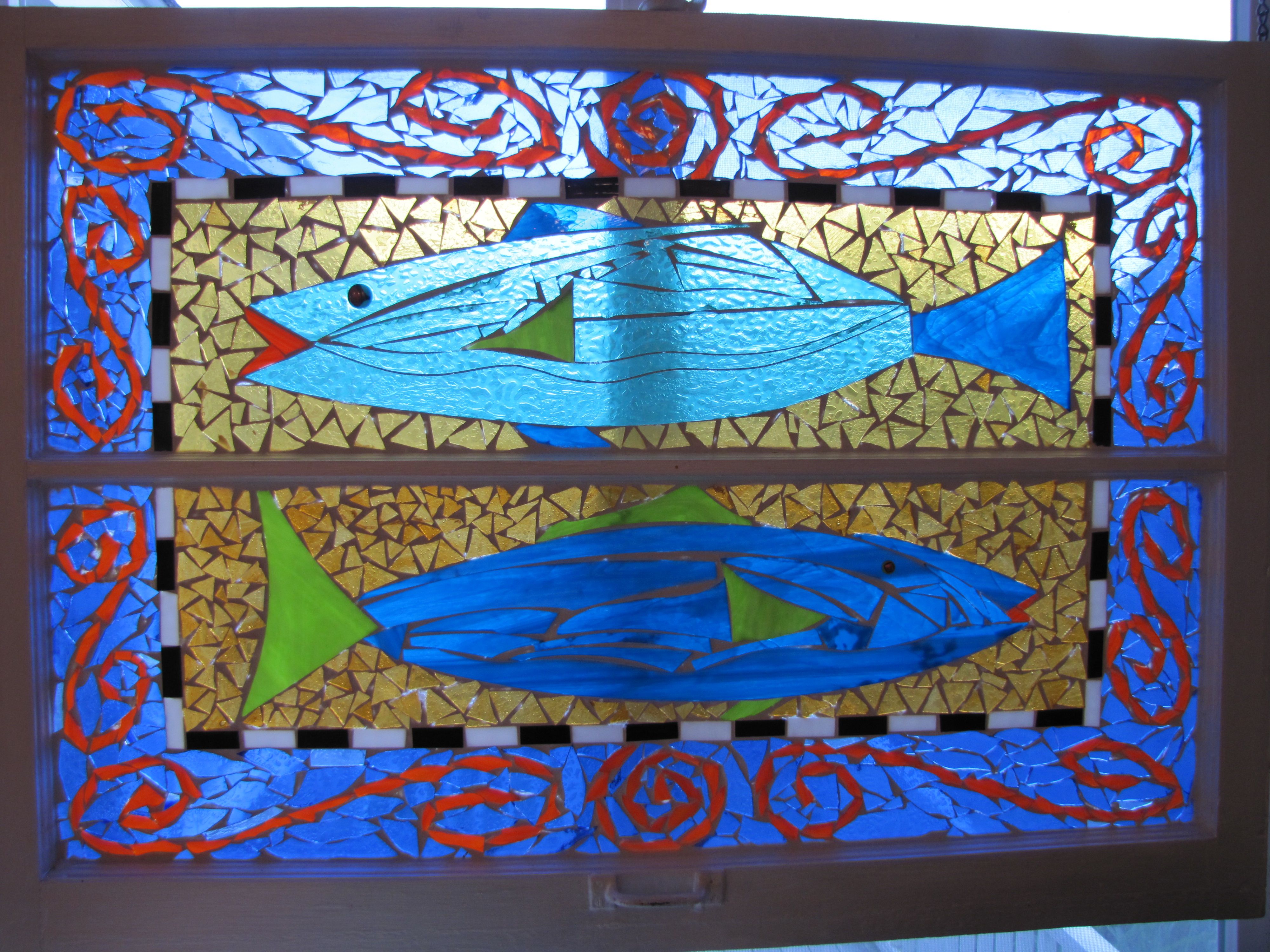
Stained glass bluefish in a beach home window Image ©Color Calling
In addition to the beautiful color pop in this kitchen, the stained glass art blocks an uninspiring view of the back parking area, and affords privacy, while still allowing light to stream in.

Image ©Color Calling
A good designer or even a friend with a great eye can tell you where to accessorize and where to edit. You want your accessories to have maximum impact with minimum clutter. It is all about creating visual appeal. A good designer can help you vary colors, shapes, heights, and textures to achieve just that.
What’s with these pot-filler faucets?

Source: houseofturquoise.com via Emily on Pinterest


Source: twopeasandtheirpod.com via frecklesqueak on Pinterest
Some trendy design features absolutely baffle me. Really tall banquette seating that relates to nothing else in the breakfast room is one. A pot-filler faucet over the range is another.
Unless you have a pasta drain next to your range, you are going to be carrying an even heavier pot than the one you just filled, back to the sink to drain it.
And, like it or not, this off-center, wonky-looking faucet will be the focal point of your range. It just will be.
Are you thinking of installing a pot-filler in your new kitchen? Or, do you have a pot-filler already? Is my take on this fair? What do you think?
Bold summer colors for entertaining
With the start of the summer months, people naturally spend more time outdoors. Outdoor entertaining is one of the great pleasures of the warm weather months. Summer calls for bright, bold, happy colors on the table. Here are some ideas.
White hydrangeas in simple glasses tied with festive grosgrain:

Source: google.com via Ellen on Pinterest
How about this stunner for the tablecloth?

Source: lsfabrics.com via Ellen on Pinterest
Add this charger to pick up on the punch of orange:

Source: overstock.com via Ellen on Pinterest
These darling Kate Spade dinner plates to rest on the larger orange chargers (pictures not to scale)

Summer evenings call for warm-weather fare. How about crab cakes, fresh corn pudding, and cole slaw?

Source: Uploaded by user via Ellen on Pinterest
Bon appétit!
A Touch of Black

Nothing kills the calm in a neutral beige room faster than dead-white lampshades. These are going to be changed out for black (or maybe navy) drum shades as soon as I can find a pair of them in the right size!
 Color Calling


